
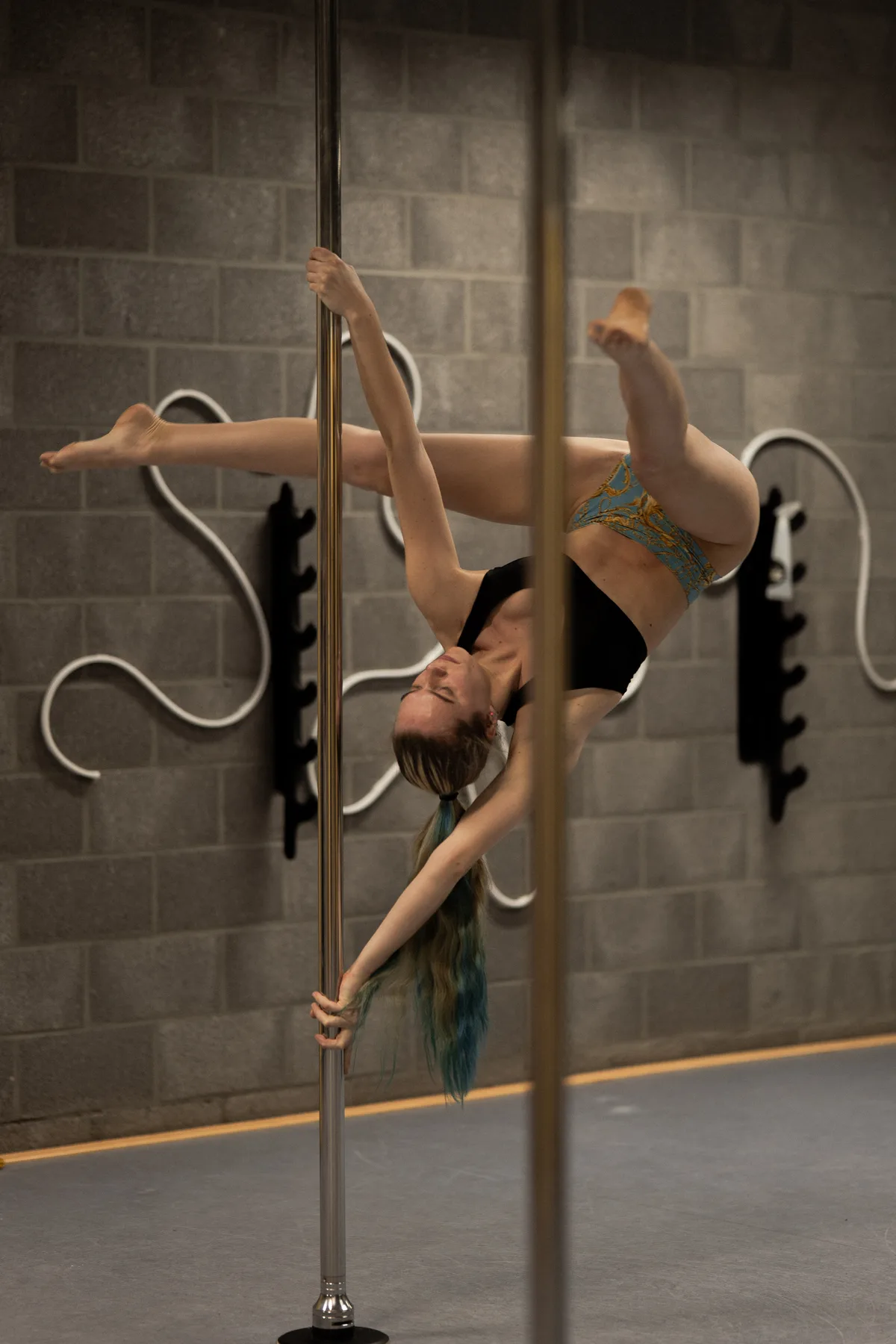
Start with the room
Measure the exact floor-to-ceiling height and check it in more than one place. Then measure the clear space around the pole at floor level and higher up. You need enough room to extend your arms and legs, spin and descend without hitting furniture, walls, lamps or sloping ceilings.
Check the ceiling and floor
A removable tension-mounted pole needs a flat, solid floor and a structurally sound ceiling. Place the upper dome beneath a joist or another load-bearing point, never against a suspended ceiling or a weak decorative panel. A very flexible floor, underfloor heating or a delicate finish may require extra advice. If you cannot identify the structure with confidence, ask a qualified professional.
Choose the mounting type
A tension-mounted pole is removable and needs no drilled fixing when installed correctly. A permanently mounted pole uses a fixed ceiling mount and is practical for frequent training. A freestanding stage pole needs no ceiling connection, but its base is larger, the usable pole can feel different and the complete unit is heavy to move.
Static, spinning or both
Most quality home poles can switch between static and spinning mode. Static mode is useful for learning foundations and conditioning. Spinning mode rotates with you and requires separate control of momentum. If you train both in class, choose a model that supports both modes without complicated conversion.
Diameter and finish
A 45 mm pole is common in studios and competitions and usually makes the transition between home and class straightforward. Thinner or thicker poles change how your hands and legs wrap around them. Chrome, stainless steel, brass, powder-coated and silicone finishes differ in grip, maintenance and suitability for skin sensitivities. At Pole Arena, we use both chrome and stainless steel poles; both offer comparable grip. When possible, try the same finish before buying.
Height, extensions and usable length
Manufacturers specify a supported height range and the extensions needed for it. Stay within that range and use only compatible parts from the same system. Check how much uninterrupted pole remains after installation, especially with a stage base or a low ceiling.
Buy for safety
Choose a specialist pole manufacturer or authorised seller with clear specifications, replacement parts and installation instructions. Avoid generic dance or fitness poles with unclear load ratings, friction-only joints or plastic structural parts. A pole intended only as a prop is not suitable for tricks, spins or inverts.
We use poles by Lupit Pole in our studios. Use discount code POLEARENA123 for 10% off in their online shop.
Install and test it correctly
Follow the manufacturer’s instructions exactly and use a spirit level so the pole is vertical. Tighten it only within the recommended limits. Before every session, check all joints, the mount and the static/spin mechanism. Test gradually close to the floor before putting your full weight on it, and recheck the pole regularly because temperature and movement can affect tension.
Cleaning and maintenance
Use a cleaning method approved for the pole finish. Remove grip residue after training, keep liquids away from joints and inspect the pole for movement, damaged threads or surface wear. Stop using it if anything feels loose or unusual until it has been checked.
What to decide before ordering
Write down your ceiling height, ceiling and floor construction, available radius, preferred diameter and finish, and whether you need static and spinning modes. With those details, your teacher or the manufacturer can help confirm whether the complete setup is suitable.
Back to journal